How to achieve more colorful succulents: essential techniques and care
Share
Intense Colors in Succulents! How to Achieve Colorful Succulents
Who wouldn't want to have succulents? The vibrant coloration is one of the most attractive features of these plants, but getting succulents to look their best requires knowledge and proper techniques. Each grower chooses their own care method, but here we will share information based on experience and technical knowledge so you can maximize and maintain your colorful succulents.
Why do succulents emphasize colors?
Succulents develop intense colors in response to various stress factors.These colors are the result of the activation of natural pigments:
Chlorophyll: Responsible for the green color and essential for photosynthesis.
Carotenoids: Generate yellow, orange, and red tones.
Anthocyanins: Produce reddish, purple, and bluish colors, acting as protectors against UV radiation and other environmental factors.
How to stress our succulents to achieve maximum coloration?
1. Water stress (Lack of Water)
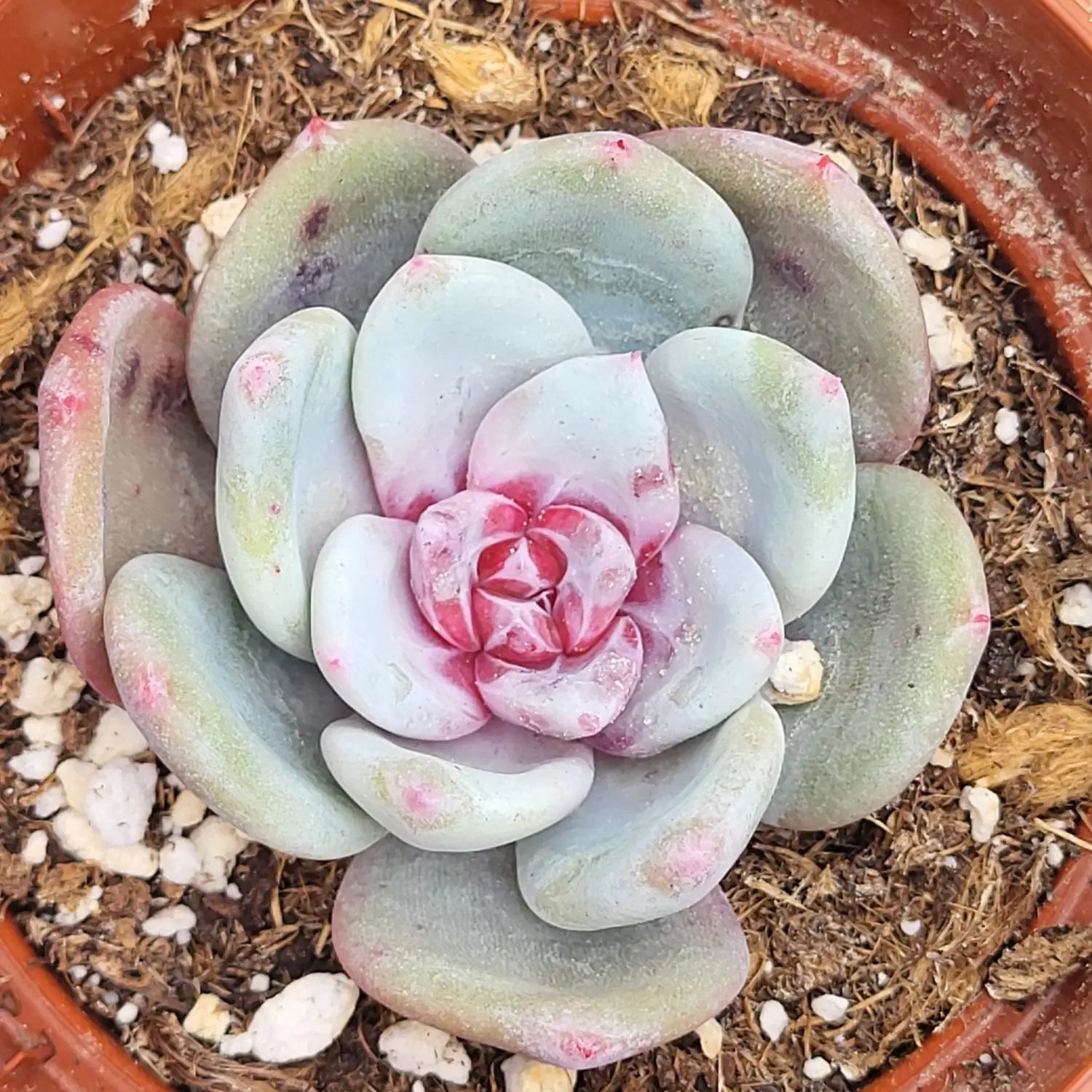
One of the most effective methods to enhance coloration in succulents is to reduce the frequency of watering. Succulents store water in their leaves and can survive for months without watering.By limiting water:
Its growth and metabolism are halted.
Pigments intensify to protect themselves from the environment.
The plant becomes compact and displays more vibrant colors.
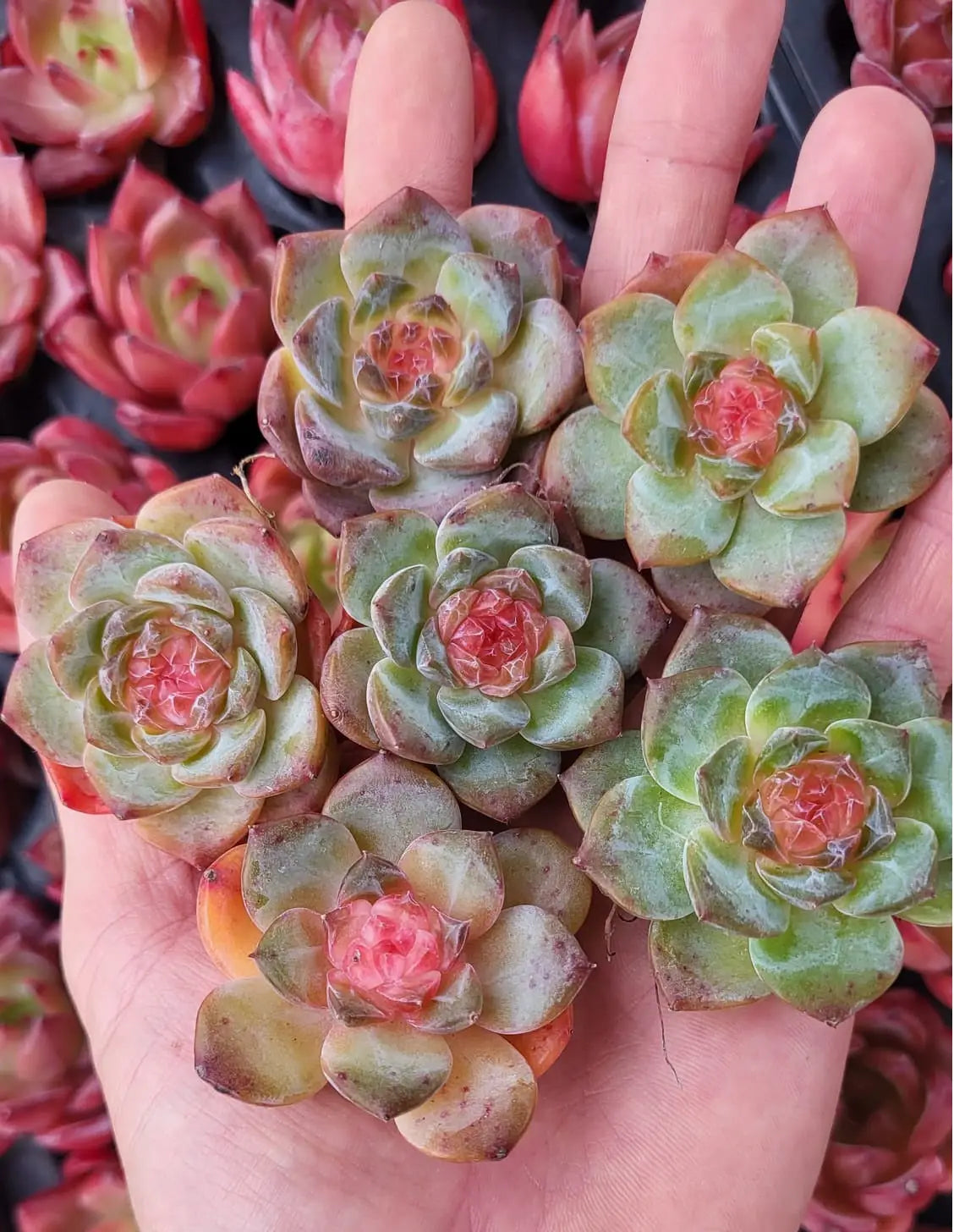
{"layout":"grid","aspectRatio":"3 / 4","imagesSelected":[{"url":"https://www.donsuculentas.com/cdn/shop/files/SEOon_WhatsApp_Image_2025-03-16_at_17.21.50.webp","altText":"Suculenta variegada mostrando estrés hídrico y evolución de coloración rojiza","title":"SEOon_WhatsApp_Image_2025-03-16_at_17.21.50.jpg?v=1742142352","id":"gid://shopify/MediaImage/49566594236754"}, {"url":"https://www.donsuculentas.com/cdn/shop/files/SEOon_WhatsApp_Image_2025-03-16_at_17.21.51_1.webp","altText":"Suculenta variegada compacta con pigmentación rojiza por falta de riego","title":"SEOon_WhatsApp_Image_2025-03-16_at_17.21.51_1.jpg?v=1742142365","id":"gid://shopify/MediaImage/49566596268370"}, {"url":"https://www.donsuculentas.com/cdn/shop/files/SEOon_WhatsApp_Image_2025-03-16_at_17.21.51.webp","altText":"Suculenta variegada intensificando pigmentación roja por falta de riegoas","title":"SEOon_WhatsApp_Image_2025-03-16_at_17.21.51.jpg?v=1742142378","id":"gid://shopify/MediaImage/49566598201682"}],"isShowCaption":true,"imagesInARow":3,"device":"desktop","imagesInARowMobile":2,"caption":"Variegated succulents with intense red coloration caused by water stress and sun exposure\n","isAutoPlay":false,"hideButtonAction":false,"captionAlign":"center","hidden":false,"locked":false,"blockName":"Image gallery","cssContent":"","componentId":""}
Variegated succulents with intense red coloration caused by water stress and sun exposure
`;
document.body.appendChild(modal);
const closeModal=document.getElementById("closeModal"),prevBtn=document.getElementById("Avada-GalleryModal__prevBtn"),nextBtn=document.getElementById("Avada-GalleryModal__nextBtn"),currentSlide=document.getElementById("currentSlide"),totalSlides=document.getElementById("totalSlides");
function updateSlideNumber(){currentSlide.textContent=n+1}
function nextSlide(){n=(n+1)%r;updateSlide()}
function prevSlide(){n=(n-1+r)%r;updateSlide()}
function initializeSlideNumbers(){totalSlides.textContent=r;updateSlideNumber()}
function updateSlide(){document.querySelectorAll(".Avada-GalleryModal__Slide").forEach(slide=>{slide.style.transform="translateX("+-100*n+"%)"});updateSlideNumber()}
closeModal.addEventListener("click",()=>{document.body.removeChild(modal)});
if(nextBtn)nextBtn.addEventListener("click",nextSlide);
if(prevBtn)prevBtn.addEventListener("click",prevSlide);
initializeSlideNumbers()
})
})
})();
2.Solar Exposure and Extreme Temperatures
Intense light and low temperatures also influence the pigmentation of succulents:
High solar exposure: Activates the production of anthocyanins, intensifying reddish and purple tones in succulents.
Cold temperatures: Some species of succulents develop more intense colors in winter.
3. Nutritional Stress
A substrate with low nitrogen content helps maintain colorful succulents, as excess of this nutrient promotes accelerated growth and a greener coloration.
4.Chemical Stress (Growth Regulators)
Large producers use chemical compounds to intensify coloration and compact succulents before marketing them. Some of these regulators are:
CCC (Chlormequat Chloride)
Paclobutrazol
Prohexadione
Trinexapac
These compounds inhibit the synthesis of gibberellins (GA) and increase the content of cytokinins (CK), which slows down growth and enhances coloration in a short time. This technique allows succulents to display their maximum chromatic expression at the time of being marketed.
Conclusion
The color of succulents is not just an aesthetic issue, but a response to their environment and how we manage their cultivation. With the right techniques, we can enhance the beauty of succulents naturally or through growth regulators. You decide how you want to highlight the splendor of your colorful succulents! Now you have more knowledge to have colorful succulents.
Learn how to cultivate variegated succulents step by step
If you want to delve into all the essential care —substrate, watering, light, pot, or stability of the variegation— we recommend our complete cultivation guide:
{"posts":[{"id":"gid://shopify/Article/612906664274","title":"Suculentas variegadas: guía de cultivo y cuidados esenciales","imageUrl":"https://cdn.shopify.com/s/files/1/0945/4288/9298/articles/guia-cultivo-echeverias-variegadas_159fe2a6-f769-4763-a5fc-258ee88e16a1.png?v=1771876017&width=400","imageAlt":"Conjunto de Echeverias variegadas con distintos patrones de variegación en cultivo","handle":"suculentas-variegadas-guia-cultivo","blogTitle":"Blog","blogHandle":"noticias","publishedAt":"2026-02-12T22:20:02Z","summary":"En esta guía completa sobre suculentas variegadas repasamos los cuidados esenciales para su correcto desarrollo: desde la aclimatación inicial hasta el riego por inmersión, el sustrato ideal, el tamaño de maceta o la estabilidad de la variegación. Un enfoque práctico orientado a cultivadores que buscan plantas sanas, compactas y con patrones de color estables a largo plazo.","postUrl":"https://www.donsuculentas.com/blogs/noticias/suculentas-variegadas-guia-cultivo"}, {"id":"gid://shopify/Article/610142912850","title":"Suculentas variegadas: cuidados y reproducción","imageUrl":"https://cdn.shopify.com/s/files/1/0945/4288/9298/articles/cuidados-basicos-suculentas-variegadas-reproduccion_f99ad440-07f9-4fbe-bbca-3f7771396290.png?v=1771878578&width=400","imageAlt":"Suculentas variegadas con múltiples rosetas tras reproducción por corte","handle":"suculentas-variegadas-cuidados","blogTitle":"Blog","blogHandle":"noticias","publishedAt":"2025-03-06T16:55:00Z","summary":"Las suculentas variegadas destacan por sus colores únicos y su rareza, convirtiéndolas en auténticas joyas para coleccionistas. Descubre qué es la variegación, sus tipos (natural e inducida), cómo cuidarlas correctamente y los mejores métodos de propagación para conservar su belleza. Aprende a mantener su coloración y evitar que reviertan a su forma original. ¡Conviértete en un experto en suculentas variegadas con Don Suculentas!","postUrl":"https://www.donsuculentas.com/blogs/noticias/suculentas-variegadas-cuidados"}, {"id":"gid://shopify/Article/612747772242","title":"Por qué las suculentas variegadas crecen más lento","imageUrl":"https://cdn.shopify.com/s/files/1/0945/4288/9298/articles/por-que-suculentas-variegadas-crecen-mas-lento_5e47ae41-c624-4356-8db7-1dca8d83f056.png?v=1771877025&width=400","imageAlt":"Comparativa de suculentas variegadas mostrando diferencia de tamaño y ritmo de crecimiento","handle":"crecimiento-suculentas-variegadas","blogTitle":"Blog","blogHandle":"noticias","publishedAt":"2026-02-23T00:48:02Z","summary":"Las suculentas variegadas crecen más lento por su propia naturaleza. En este post explicamos por qué ocurre, cómo funciona la variegación y por qué respetar su ritmo es clave para cuidarlas correctamente.","postUrl":"https://www.donsuculentas.com/blogs/noticias/crecimiento-suculentas-variegadas"}, {"id":"gid://shopify/Article/612746035538","title":"Guía lunar para suculentas: cuándo regar, abonar, trasplantar y hacer esquejes","imageUrl":"https://cdn.shopify.com/s/files/1/0945/4288/9298/articles/guia-lunar-cultivo-suculentas-variegadas_9dcaaea3-7ebd-4865-9840-971732d7c355.png?v=1771874797&width=400","imageAlt":"Suculenta variegada en exterior nocturno representando el cultivo según ciclo lunar","handle":"guia-lunar-suculentas-variegadas","blogTitle":"Blog","blogHandle":"noticias","publishedAt":"2026-02-09T09:00:06Z","summary":"Las cuatro fases principales de la luna —luna nueva, cuarto creciente, luna llena y cuarto menguante— marcan distintos ritmos de actividad en las plantas. En el cultivo de suculentas, conocer estas fases nos permite elegir mejor cuándo regar, trasplantar, hacer esquejes o aplicar tratamientos, reduciendo riesgos y respetando el ciclo natural de la planta.","postUrl":"https://www.donsuculentas.com/blogs/noticias/guia-lunar-suculentas-variegadas"}, {"id":"gid://shopify/Article/612747641170","title":"10 Errores comunes en el cuidado de suculentas variegadas | Guía práctica","imageUrl":"https://cdn.shopify.com/s/files/1/0945/4288/9298/articles/errores-cuidado-suculentas-variegadas-quemadura-solar_b8c3053a-95b7-4b7b-9dd2-82c5d4c7736c.png?v=1771877704&width=400","imageAlt":"Suculenta variegada con quemaduras solares visibles en las hojas","handle":"errores-suculentas-variegadas","blogTitle":"Blog","blogHandle":"noticias","publishedAt":"2026-02-16T00:32:00Z","summary":"Las suculentas variegadas requieren cuidados específicos y pequeños errores pueden afectar seriamente a su salud. En este artículo repasamos los errores más comunes y cómo evitarlos para mantener plantas sanas y estables.","postUrl":"https://www.donsuculentas.com/blogs/noticias/errores-suculentas-variegadas"}, {"id":"gid://shopify/Article/612747477330","title":"10 consejos para cuidar suculentas variegadas en invierno","imageUrl":"https://cdn.shopify.com/s/files/1/0945/4288/9298/articles/consejos-cuidar-suculentas-variegadas-invierno.png?v=1771875076&width=400","imageAlt":"Ilustración de Alpaca en invierno cuidando una suculenta variegada protegida del frío.","handle":"suculentas-variegadas-invierno","blogTitle":"Blog","blogHandle":"noticias","publishedAt":"2026-02-02T09:00:03Z","summary":"Durante el invierno, las suculentas variegadas entran en reposo y requieren cuidados específicos. En este post te explicamos 10 consejos prácticos para protegerlas del frío, ajustar el riego y evitar errores comunes.","postUrl":"https://www.donsuculentas.com/blogs/noticias/suculentas-variegadas-invierno"}],"isRemoveBranding":true,"heading":"Related posts","typeSearch":"post","device":"desktop","isShowExcerpt":true,"isShowPublishedDate":true,"hidden":false,"locked":false,"isBlankLink":false,"blockName":"Related posts","currentLocale":"en-US","cssContent":"","id":"Avada-Tool__RelatedBlogs-2"}
In this comprehensive guide to variegated succulents, we review the essential care for their proper development: from initial acclimatization to immersion watering, the ideal substrate, pot size, or the stability of variegation.A practical approach aimed at growers seeking healthy, compact plants with stable long-term color patterns.
Variegated succulents stand out for their unique colors and rarity, making them true gems for collectors. Discover what variegation is, its types (natural and induced), how to care for them properly, and the best propagation methods to preserve their beauty. Learn how to maintain their coloration and prevent them from reverting to their original form.Become an expert in variegated succulents with Don Suculentas!
Variegated succulents grow slower by their very nature. In this post, we explain why this happens, how variegation works, and why respecting their pace is key to caring for them properly.
The four main phases of the moon —new moon, first quarter, full moon, and last quarter— mark different rhythms of activity in plants. In the cultivation of succulents, knowing these phases allows us to better choose when to water, transplant, take cuttings, or apply treatments, reducing risks and respecting the natural cycle of the plant.
Variegated succulents require specific care, and small mistakes can seriously affect their health. In this article, we review the most common mistakes and how to avoid them to keep plants healthy and stable.
During winter, variegated succulents enter dormancy and require specific care. In this post, we explain 10 practical tips to protect them from the cold, adjust watering, and avoid common mistakes.