

<tc>Variegated succulents</tc>: care and reproduction
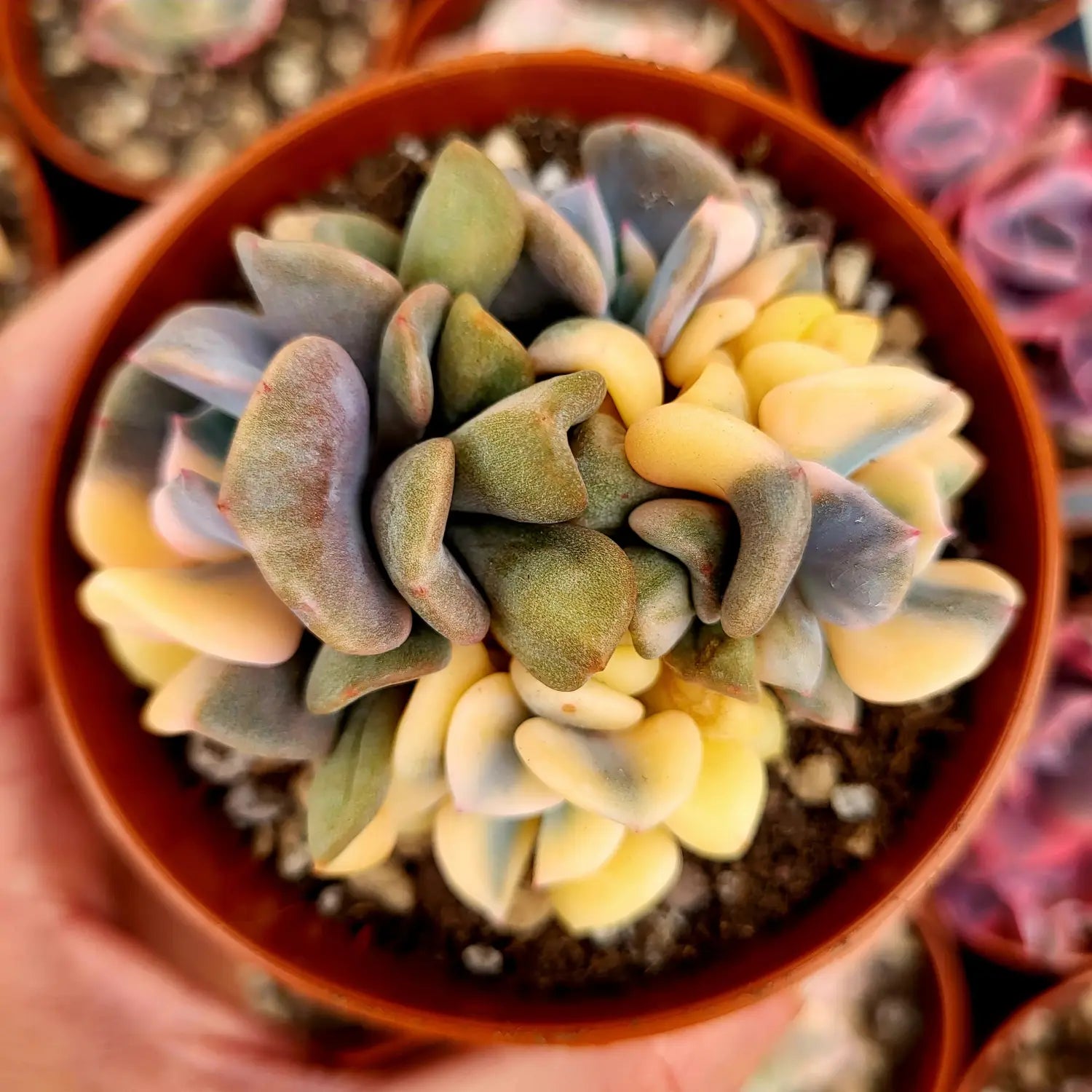
Types of Variegation
There are two main types of variegation in succulents: natural and induced.
- Natural Variegation: It occurs spontaneously when a mutation happens in the plant's tissues, affecting chlorophyll production and generating unique color patterns.If this mutation is stable, it can be propagated asexually through leaves or cuttings to obtain new plants with the same characteristics.
- Induced Variegation: Unlike natural variegation, this variegation is artificially generated through various scientific methods. However, these procedures do not always guarantee permanent results, and often induced variegation can revert. The most common methods include:
- Induced mutations: Exposure to radiation or mutagenic chemicals such as EMS (ethyl methanesulfonate) to alter DNA and generate variegations.
- In vitro culture: Application of growth hormones and controlled stress conditions in the laboratory to modify cellular pigmentation.
- Induced chimeras: Variegated tissue grafts on a green pattern, creating unique combinations.
- Controlled stress: Changes in temperature, exposure to UV light, or nutritional deficiencies can cause temporary variegations.
- Genetic editing (CRISPR-Cas9): Although in the experimental stage, the possibility of modifying genes related to chlorophyll production is being researched.
These methods are often used in research or specialized nurseries, but the stability of variegation can vary, and in many cases, plants may revert to their original state.
Care
The maintenance of this type of plant is similar to that of other succulents, but with certain additional precautions:
- Substrate: It must be well-draining, composed of a mixture of universal substrate, volcanic gravel, and pumice to avoid moisture accumulation.
- Watering: Although the water requirements are similar to those of other succulents, the variegated ones may be more susceptible to foliar fungi. It is recommended to water by immersion (from the base) to avoid moisture on the leaves.
- Light: They require controlled exposure. Too much intense light can damage the lighter areas, while too little light can cause loss of variegation.
- Temperature and Ventilation: It is important to provide a well-ventilated environment to prevent mold and regulate the temperature to avoid excessive stress on the plant.
Propagation of Variegated Succulents
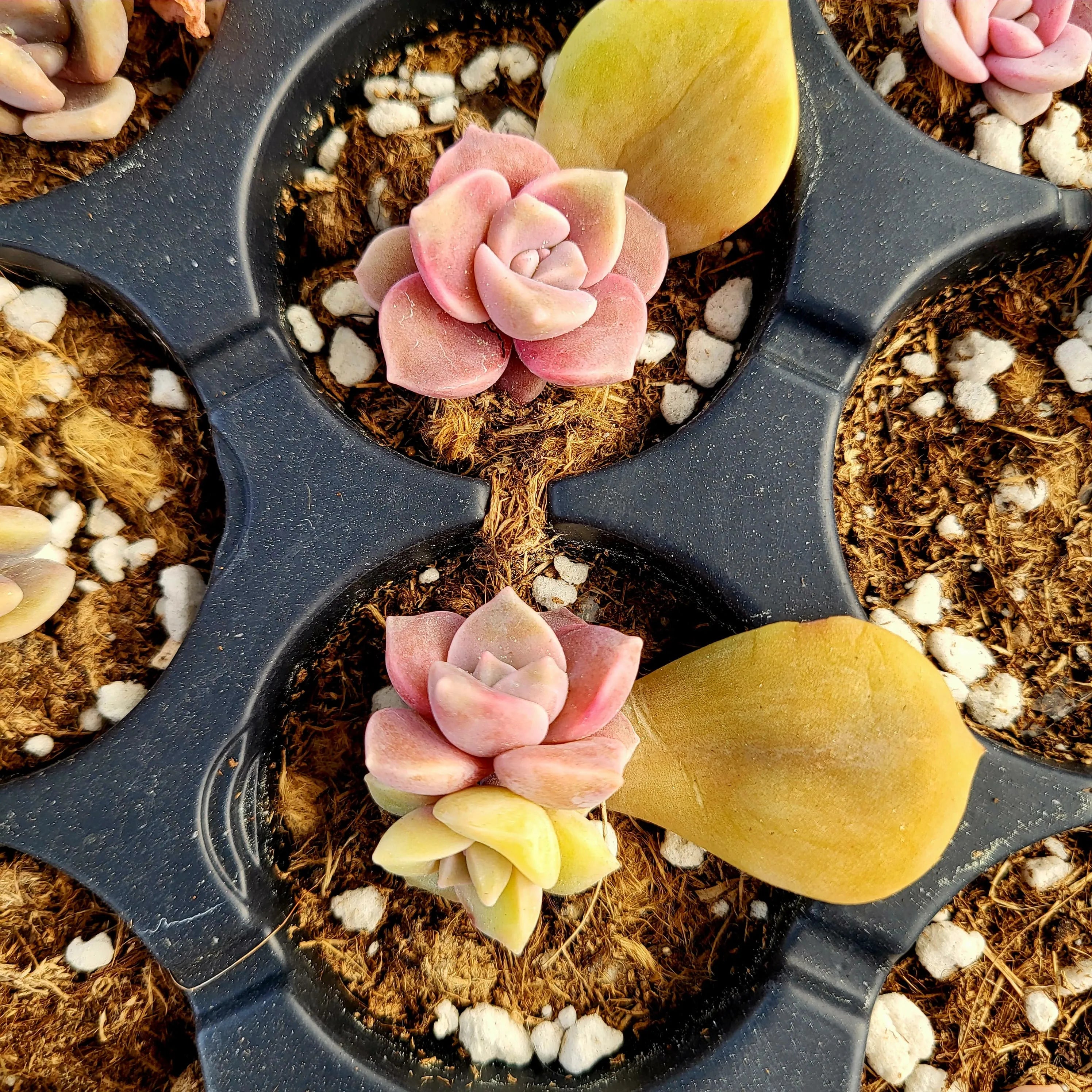
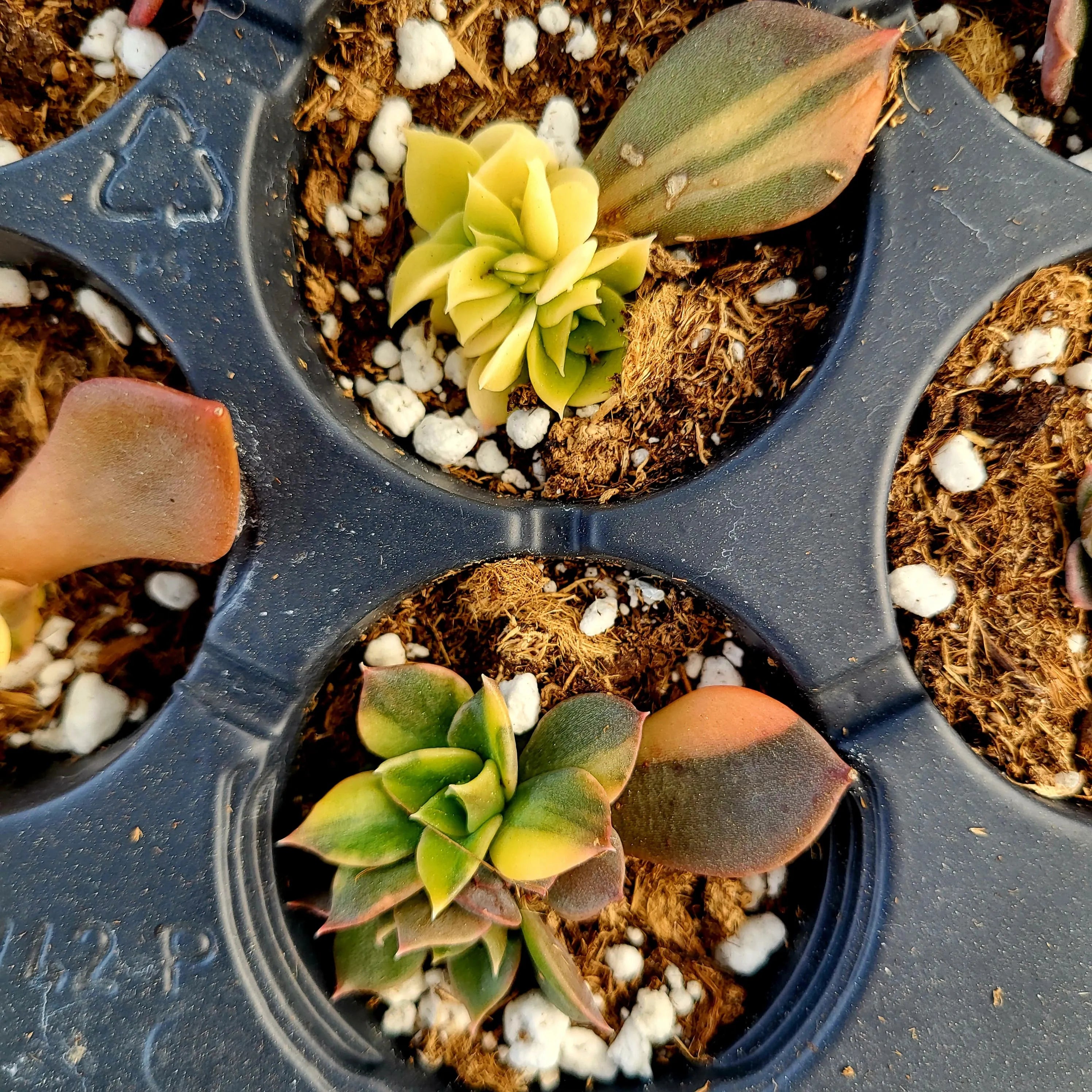
The best way to ensure that a variegated succulent retains its characteristics is through asexual propagation.There are two main methods:
-
Leaf propagation: Carefully remove a healthy leaf from the plant madre.Dejar let the leaf dry for a few days to avoid infecciones.Colocarla on a dry and well-aerated substrate, lightly burying the pice.Durante for the first few weeks do not water, to force the leaf to generate a new rosette and roots ces.Aproximadamente at 6-8 weeks, when the new rosette begins to grow, watering can be started controlado.No all the leaves will produce variegated plants; some may come out albino (without chlorophyll) and others may return to the original coloration.
- Propagation by cutting: Cut a stem from the variegated plant with a sharp tool and desinfectada.Dejar some leaves at the base so that the mother plant can continue creciendo.Aplicar sulfur powder on the cut to prevent infections and let it heal for at least a week before plantar.Una once healed, place the stem in dry substrate without initial watering until it develops roots. ces.En In 3-4 weeks, new shoots will begin to appear on the mother plant, which can be cut and propagated again.
This last method offers better success rates, as it increases the likelihood of preserving the variegation.
').join(""); const modal=document.createElement("div"); modal.classList.add("Avada-Gallery-Modal"); modal.id="dynamicModal"; Object.assign(modal.style,{position:"fixed",top:"0",left:"0",width:"100%",height:"100%",backgroundColor:"#000",zIndex:"9999",display:"flex",justifyContent:"center",alignItems:"center",color:"#fff"}); modal.innerHTML=`
`; document.body.appendChild(modal); const closeModal=document.getElementById("closeModal"),prevBtn=document.getElementById("Avada-GalleryModal__prevBtn"),nextBtn=document.getElementById("Avada-GalleryModal__nextBtn"),currentSlide=document.getElementById("currentSlide"),totalSlides=document.getElementById("totalSlides"); function updateSlideNumber(){currentSlide.textContent=n+1} function nextSlide(){n=(n+1)%r;updateSlide()} function prevSlide(){n=(n-1+r)%r;updateSlide()} function initializeSlideNumbers(){totalSlides.textContent=r;updateSlideNumber()} function updateSlide(){document.querySelectorAll(".Avada-GalleryModal__Slide").forEach(slide=>{slide.style.transform="translateX("+-100*n+"%)"});updateSlideNumber()} closeModal.addEventListener("click",()=>{document.body.removeChild(modal)}); if(nextBtn)nextBtn.addEventListener("click",nextSlide); if(prevBtn)prevBtn.addEventListener("click",prevSlide); initializeSlideNumbers() }) }) })();
Conclusion
Variegated succulents are highly valued by collectors due to their rarity and beauty. However, they require specific care to maintain their variegation and prevent them from reverting to their original color.Whether you obtain a natural mutation or work with an induced variegated plant, knowing the factors that affect its stability and propagation will ensure your success in the cultivo.Si if you are looking for high-quality variegated succulents, at Don Suculentas you will find unique and selected specimens for advanced collectors. Discover our collection!
Learn to grow variegated succulents step by step
If you want to delve into all the essential care —substrate, watering, light, pot, or stability of variegation— we recommend our complete growing guide:
If you want to expand your collection, you can explore our variegated succulents, as well as variegated aeoniums, rare succulents, and classic variegated selections for collectors.
Follow us on Instagram to see new arrivals and restocks:
- Choosing a selection results in a full page refresh.
- Opens in a new window.