<tc>Aeonium variegados</tc>: cultivation guide and essential care
The
However, although many people consider Aeonium plants to be simple, the reality is that the
Unlike many Echeveria, Aeonium primarily grow during the cold months and reduce their activity when high temperatures arrive.Understanding this natural cycle is the foundation for achieving compact, healthy plants with stable variegation for years.
In this guide, we gather everything necessary to properly cultivate
Differences in the cultivation of Aeonium
The
They are usually:
- More sensitive to strong sunlight
- More delicate against extreme heat
- Slower growing
- More sensitive to burns
- More prone to suffering reversion or albinism
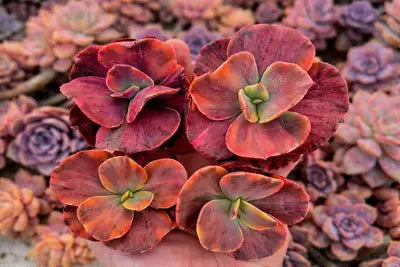
The dark colors present in many modern hybrids also absorb much more solar radiation, further increasing sensitivity during summer.
Therefore, although botanical Aeonium can grow practically abandoned in ravines, roads, or volcanic areas with very little substrate, the
Annual growth cycle
One of the most common mistakes when starting with Aeonium is treating them like other succulents: their cycle is completely different.
While many succulents actively grow in spring and summer, Aeonium do practically the opposite. Their natural cycle is usually:
- Summer → summer dormancy
- Autumn → start of growth
- Winter → maximum activity
- Spring → transition to dormancy
During summer, the rosettes usually close progressively to protect the growth center from heat and intense solar radiation.
This does not happen exactly the same in all countries or climates. A grower in Cádiz will not have the same conditions as someone growing in Switzerland or northern Europe.
Observing the plant is always more important than following fixed rules.
Light and exposure
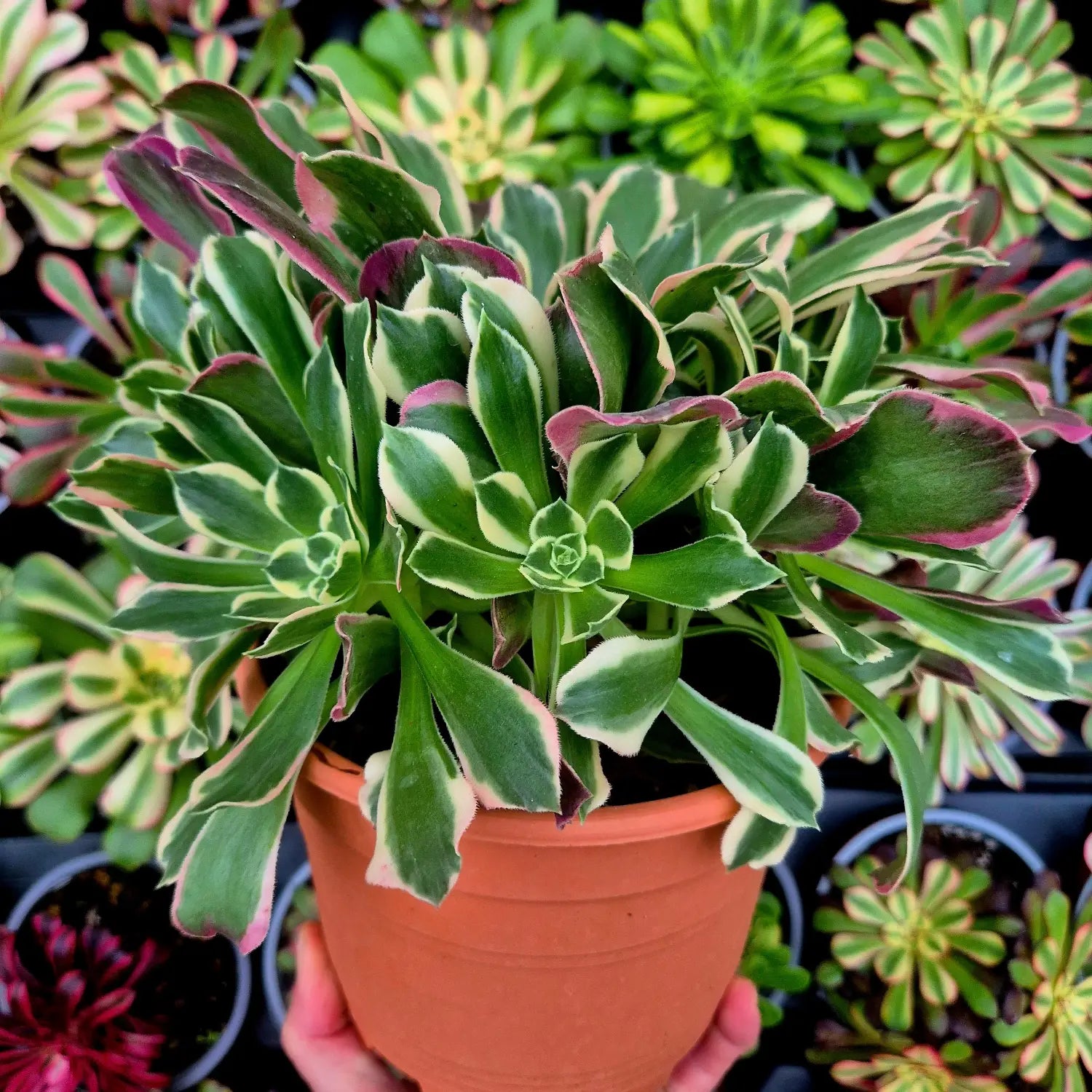
Light is one of the most important factors in the cultivation of
- More intense colors
- Compact rosettes
- Better variegation
- Stronger growth
However, during the warmer months, the situation changes completely.
It is generally recommended to avoid direct sunlight between May and September during the peak hours of the day, especially between 12:00 and 18:00. The combination of:
- High temperatures
- Increased UV radiation
- Lack of chlorophyll
- Dark colors
can cause burns, extreme dehydration, or even tissue collapse.
The ideal during summer is usually:
- Shade mesh
- Filtered light
- East orientation
- Bright patios
- Ventilated areas without strong sun
Location stability
Avoid moving them constantly. The cultivation of these plants requires light stability.
Their stomata orient towards the light, and continuous changes weaken their development.
Substrate for Aeonium
Aeonium can grow practically in any substrate if we properly control water, ventilation, and exposure.However, for pot cultivation, it is ideal to use very draining and airy mixes.
A balanced mix usually works very well:
- 50% organic substrate
- 25% pumice
- 25% volcanic gravel
The goal is to keep roots aerated and avoid prolonged moisture accumulation. Pumice and volcanic gravel are relatively inexpensive materials and very useful for reducing rot problems.
Additionally, for young specimens, it is important to adapt the pot size to the size of the plant. A small rosette will usually develop much better in a small pot than in an excessively large pot with too much accumulated moisture.
How to water Aeonium variegados
Watering should be completely adapted to the time of year and the climatic conditions.During the active phase, especially in mild autumn and winter, Aeonium appreciates quite a bit of water as long as the substrate drains properly.
As a general guideline:
- Autumn → start light watering
- Winter → more abundant watering
- Spring → gradually reduce
- Summer → avoid frequent watering
In optimal conditions and with draining substrates, they can be watered abundantly every 7 to 10 days during autumn and spring. In winter, it will depend a lot on the temperatures.
If temperatures continuously drop below 10 °C, the plant will slow down its activity significantly, and it is advisable to space out the waterings more.
With temperatures close to 5 °C or lower for several days, it is preferable to keep the plants completely dry and protect them.
What happens during summer dormancy
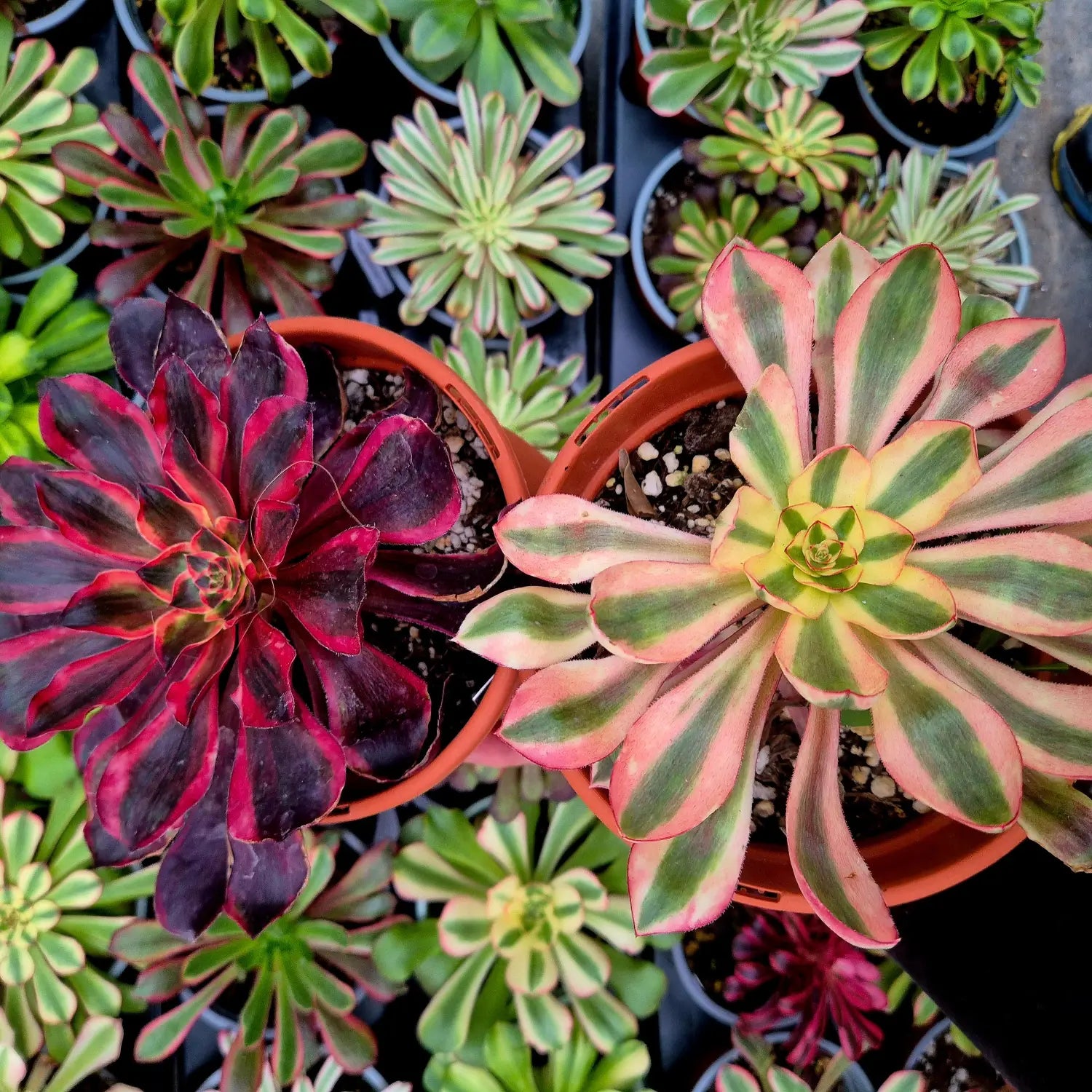
Summer is probably the most delicate phase of the cultivation of
During summer dormancy, Aeonium significantly reduce their activity and practically stop absorbing water. In their natural habitat, this coincides with the driest and hottest time of the year.
For this reason, the rosettes progressively close to protect the growth center and reduce moisture loss. Normally, strong dormancy occurs approximately between mid-June and mid-September, although this can vary greatly depending on the climate and actual growing temperatures.
During this phase:
- We should not try to stimulate growth
- We must significantly reduce watering
- Excess moisture promotes fungi
- Ventilation becomes essential
Here it is important to understand something key: if we have very high temperatures and the rosettes remain completely closed, we normally should not water.
Especially when combined with:
- Maximums above 30 °C
- Nighttime minimums above 20 °C
- Constant tropical nights
- High environmental humidity
Under these conditions, the plant practically does not consume water. If we water abundantly, the substrate remains wet for too long and we significantly increase the risk of fungi, rot, and root collapse.
Many losses of Aeonium during summer occur not due to lack of water, but due to excess humidity combined with extreme heat.
If for a few days the temperatures give a slight respite, a very light misting can be done on the leaves during the afternoon or early evening to help slightly cool the plant without saturating the substrate.
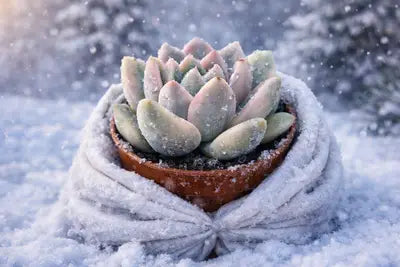
Cold temperatures and protection in winter
Aeonium tolerate mild cold quite well, but prolonged frosts can cause serious damage, especially in variegated varieties or delicate hybrids.
If temperatures drop for several days below 5 °C, it is ideal to protect the plants.
Some options are:
- Thermal blanket
- Cold greenhouse
- Rain protected area
- Bright interior without heating
It is also important to understand that when temperatures start to continuously drop below 10 °C, we usually need to significantly reduce watering or even temporarily suspend it.
With low temperatures, Aeonium slow down their activity significantly and the substrate takes too long to dry. If we continue to water frequently under these conditions, we greatly increase the risk of root and stem rot.
During intense cold waves, it is preferable to keep the plants completely dry rather than trying to keep them actively growing. Growing them permanently indoors usually does not work well.
Aeonium need:
- A lot of light
- Constant ventilation
- Temperature difference between day and night
Without these conditions, they tend to etiolate quickly, losing compactness, coloration, and structural stability.
Fertilization
Aeonium have relatively low nutritional requirements. If we perform periodic repotting every two years using a new and balanced substrate, it often will not be necessary to fertilize.
In professional production, mild fertilizers with low nitrogen formulations are usually used. N-P-K formulas such as: 3-1-5 work quite well. An excess of phosphorus can induce premature flowering, while an excess of nitrogen usually results in weak and less compact growth.
Multiplication
Aeonium can reproduce in various ways.
The most common are:
- Cutting of cuttings
- Grafting
- Sexual reproduction through seeds
Reproduction by cutting is usually the fastest and safest way to maintain characteristics of the mother plant. Cuts made near the rosette typically produce more compact and higher quality shoots.
In large collections, moreover, Aeonium hybridize very easily and generate spontaneous hybrids constantly.
Flowering and monocarpism
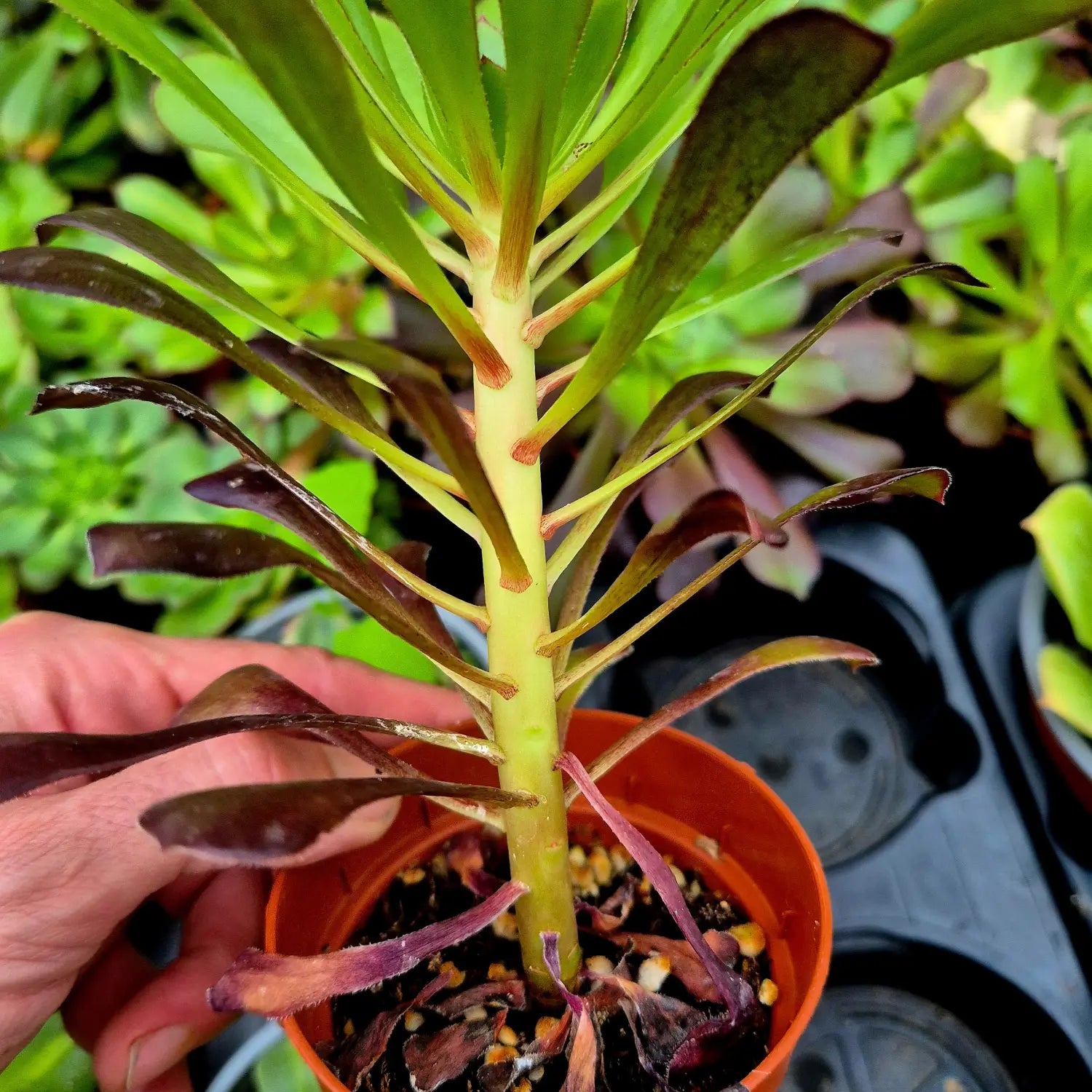
There is quite a bit of confusion about flowering in Aeonium. Although some botanical Aeonium are indeed monocarpic, most modern hybrids currently cultivated do not present serious problems associated with flowering.
The usual is that:
- A specific head flowers
- That rosette dies after flowering
- The rest of the plant continues to grow normally
In large specimens with multiple heads, it is completely normal to observe partial flowerings. Additionally, many times new rosettes sprout again from old parts of the stem after flowering.
Reversion in Aeonium
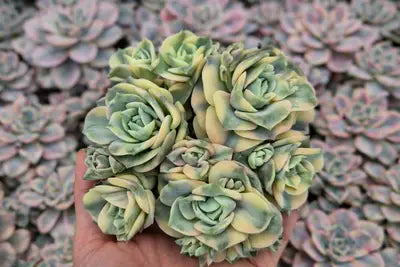
As they are genetic mutations, the
The albino parts, however, are not viable in the long term if they do not maintain sufficient functional tissue. Management will depend on the grower's objective.
- Maintain a completely variegated aesthetic
- Recover vigor in weakened plants
- Attempt to stabilize certain mutations
- Encourage faster growth
In some cases, it is advisable to quickly remove reverted shoots. In others, it may be interesting to temporarily keep them to strengthen weak specimens.
Additionally, in specimens with many years of cultivation, it can also be very attractive to observe plants with different types of rosettes coexisting in the same colony. The combination of completely variegated areas, partially reverted shoots, and different shades can create unique specimens with a lot of visual character within the collection.
Conclusion
The cultivation of
Beyond strict rules, observation remains the most important tool for the grower.
Each climate, terrace, garden, or collection generates different conditions. Learning to interpret the signals of the plant is what truly allows you to keep compact, healthy, and stable Aeonium for years.
With proper exposure, an aerated substrate, and consistent water management,
Complete guide to growing variegated succulents
If you want to delve into the general care that all variegated succulents share —substrate, basic watering, lighting, or variegation stability— you can consult our main guide:
If you want to expand your collection, you can explore our variegated succulents, as well as variegated aeoniums, rare succulents and classic variegated selected for collectors.
If you want to expand your collection with selected specimens, you can explore our
Follow us on Instagram to stay updated on our latest news: