Donsuculentas
Pachyveria "Orpet" variegated
Pachyveria "Orpet" variegated
Could not load pickup availability
Pachyveria "Orpet" variegated – Origin: Asia
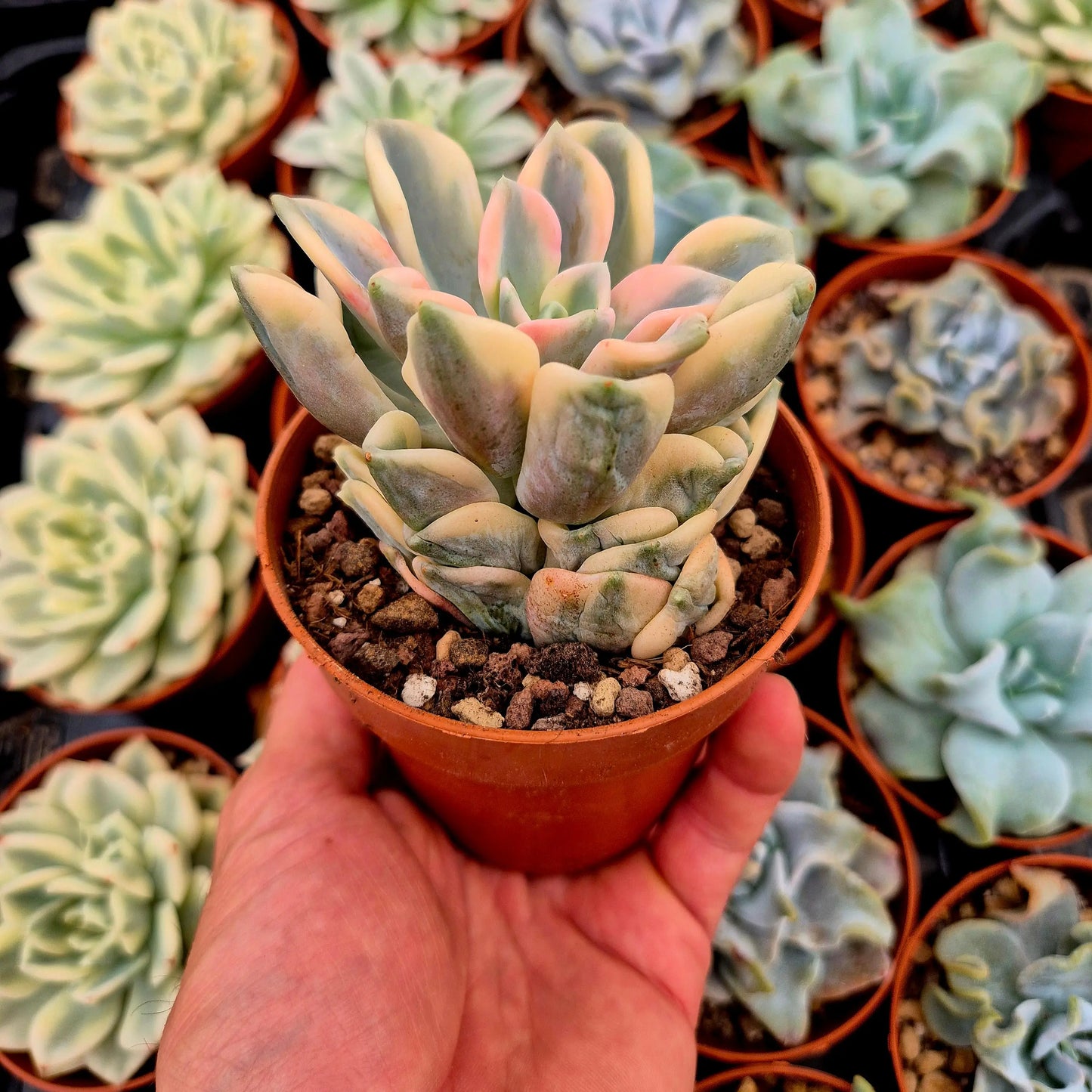
The Pachyveria “Orpet” variegated is the variegated form of this classic hybrid between Pachyphytum oviferum and Echeveria colorata, combining volume and softness with a more open and elegant structure. It develops a rosette of thick, elongated, and slightly curved leaves, where the influence of Pachyphytum is clearly appreciated in the fleshy and powdery texture, balanced by the more stylized shape inherited from Echeveria.
The Pachyveria “Orpet” variegated stands out for its variegation in cream, pale green, and pinkish hues that intensify with good light, especially on edges and exposed areas. This mix creates a soft and luminous effect, very different from more contrasted variegations, providing a delicate and pastel appearance.It is a particularly attractive variety among variegated hybrids due to its combination of volume, texture, and subtle coloration, ideal for collections seeking pieces with presence but a softer aesthetic.
⚠️ Attention
These plants come from previously grafted specimens, so they are shipped without a root system. They are completely healthy and viable plants, but will require new rooting at the destination. We recommend planting them in very well-draining substrate, keeping them in a bright environment without direct sunlight, and avoiding watering until they begin to emit roots.
| 🌞 Light | 💧 Watering | 🌱 Difficulty | 📈 Growth |
|---|---|---|---|

|
|
|
|
Variegated Pachyveria: cultivation and care
Variegated Pachyveria combine the compactness of many Echeveria with the thick, fleshy leaves characteristic of Pachyphytum. Their growth is usually slow or moderate, developing especially intense colors with good lighting and mild temperatures.
- 🌞 A lot of filtered light to maintain coloration and compactness
- 💧 Water only when the substrate is completely dry
- 🌡️ Avoid excess moisture and prolonged extreme heat
- 🪨 Very draining substrate and good ventilation
Many varieties develop a natural layer of farina on the leaves, helping to protect the plant from radiation and dehydration. Constantly handling them can disrupt this natural protection and affect their ornamental appearance.
With slight temperature differences between day and night, pink, lilac, cream, and blue tones tend to intensify, especially during spring and autumn.
You can expand all the technical information in our specialized guide: Complete guide to growing variegated succulents
Shipping
The plant is shipped bare root (without substrate or pot).
The image corresponds to the exact specimen or one of very similar size and coloration depending on availability.
More variegated succulents
View collection of variegated succulents
Related collections: