Go directly to the product information
1 of 2

Donsuculentas

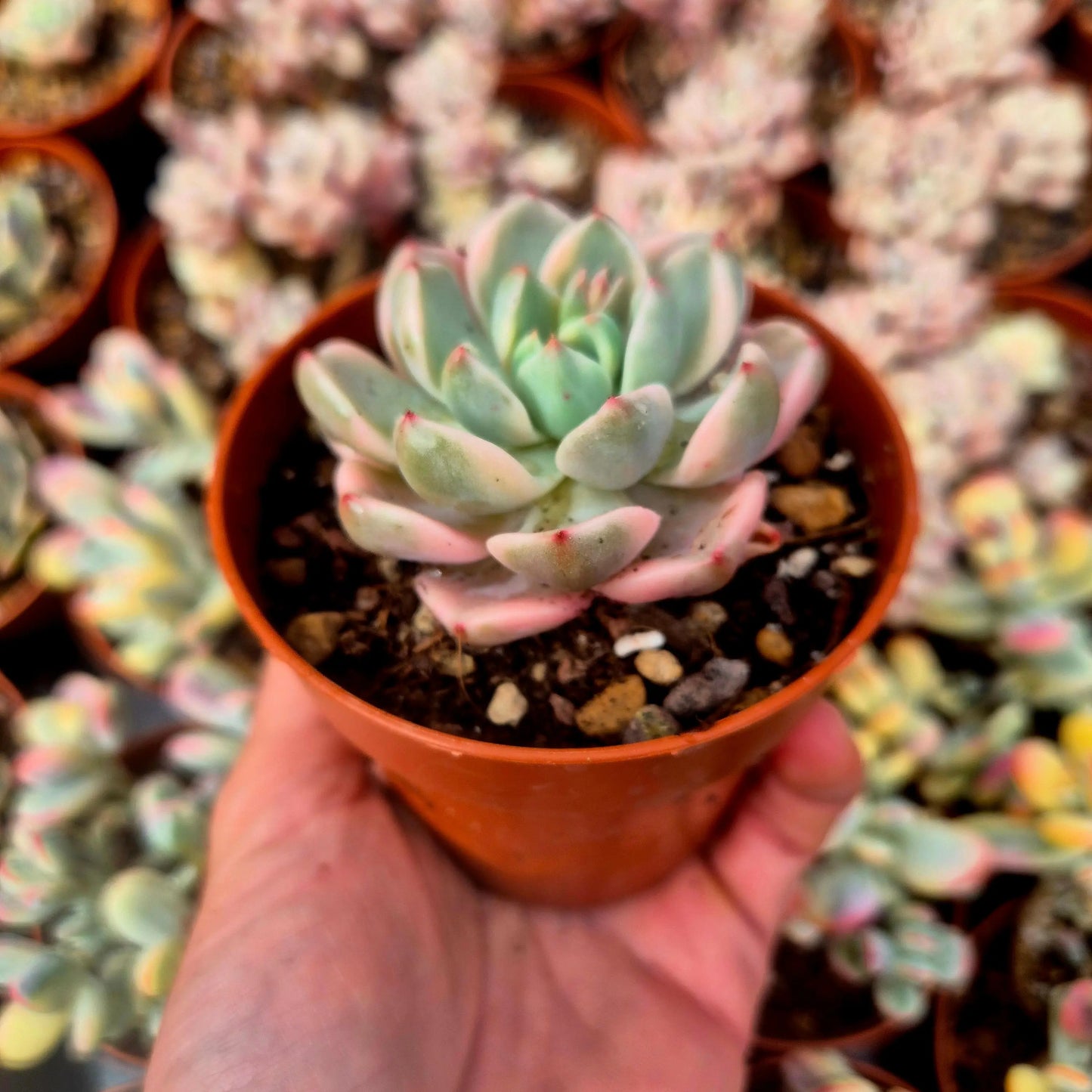
<tc>Graptoveria "Pretty in Pink" variegated</tc>

<tc>Graptoveria "Pretty in Pink" variegated</tc>

Regular price €14,95 EUR
Regular price Sale price €14,95 EUR
Offer Out of stock
Taxes included. The shipping costs are calculated on the checkout screen.
Quantity

Only 3 units 🌵 left

Graptoveria "Pretty in Pink" variegated – Origin: Asia

The Graptoveria "Pretty in Pink" variegated is a compact hybrid with thick leaves featuring creamy variegation and pronounced pink tones. It forms symmetrical rosettes that combine soft greens with whitish or yellowish stripes, and develops pastel pink and coral hues when it receives good lighting or slight stress conditions.

The Graptoveria "Pretty in Pink" variegated has a slow but steady growth, and tends to remain low and tight, making it ideal for collections where space is limited. It primarily reproduces by offsets, although it can also be propagated by leaf with patience.

🌞 Light 💧 Watering 🌱 Difficulty 📈 Growth
Graptoveria ’Pretty in Pink’ variegada Graptoveria ’Pretty in Pink’ variegada Graptoveria ’Pretty in Pink’ variegada

Graptoveria "Pretty in Pink" variegated: general information and care

Variegated graptoverias are collectible succulents especially appreciated for the shape of their rosettes and the uniqueness that variegation brings to each specimen. Unlike traditional green graptoverias, variegated varieties exhibit an irregular distribution of chlorophyll, making each plant unique and evolving differently over time.

This type of succulents requires more careful cultivation and constant observation, as variegation implies a lower photosynthetic capacity. For this reason, variegated graptoveria are primarily aimed at enthusiasts and collectors who seek plants with high ornamental value and understand the importance of respecting their natural rhythms.

You can expand on all the recommendations in our specialized guide: Complete Guide to Cultivating Variegated Succulents.


Growth and Behavior

Variegated graptoveria generally exhibit slower growth than their non-variegated counterparts. During the early stages, they may take time to develop a compact and well-formed rosette, which is completely normal for this type of plant. Their evolution largely depends on the stability of the cultivation conditions and avoiding sudden changes in location, temperature, or watering.


Sun exposure

Light is a key factor in the cultivation of variegated graptoveria, but it must be managed with caution.

  • They prefer abundant and well-filtered light
  • Direct intense sunlight should be avoided, especially during the peak hours of the day
  • A gentle exposure in the morning or late afternoon is ideal

Excessive sunlight can cause burns, while a lack of light can lead to open rosettes or unbalanced growth.


Watering

Watering is one of the most delicate aspects in the cultivation of variegated graptoveria.

  • Water only when the substrate is completely dry
  • Avoid wetting the leaves at all times
  • Submersion watering is the safest and most recommended method

Excess water is the main cause of problems in this type of plants, especially during periods of lower activity.


Temperature

These plants thrive best in moderate temperatures.

  • Ideal range: between 12 °C and 30 °C
  • Protect against frost
  • Avoid prolonged exposure to extreme heat

With very high or very low temperatures, the plant reduces its activity, which should be respected by adjusting watering and care.


Final considerations

Variegated graptoverias are not fast-growing or low-maintenance plants, but they offer exceptional aesthetic rewards to those who understand their needs. With the proper care, they become stable, long-lived, and highly valuable pieces within any succulent collection. Additionally, being varieties with time in the market, their genetics are more stable, making it less likely for them to completely revert or evolve into fully albino specimens compared to more recent mutations.


Shipping

The plant is shipped bare root (without substrate or pot).
The image corresponds to a 8.5 cm pot.


Expand your collection

If you are interested in classic variegated varieties, you can explore other available varieties within our specialized collection.

View complete collection of Classic variegated varieties

Variegated succulents

Rare succulents

Aeonium variegados

The classic variegated Graptoveria represent one of the most stable and established groups within the collection of ornamental succulents.

View all details