Donsuculentas
<tc>Aeonium "Kaleidoskope"</tc> variegated
<tc>Aeonium "Kaleidoskope"</tc> variegated
Could not load pickup availability
Aeonium "Kaleidoskope" variegated - Origin: Don Suculentas
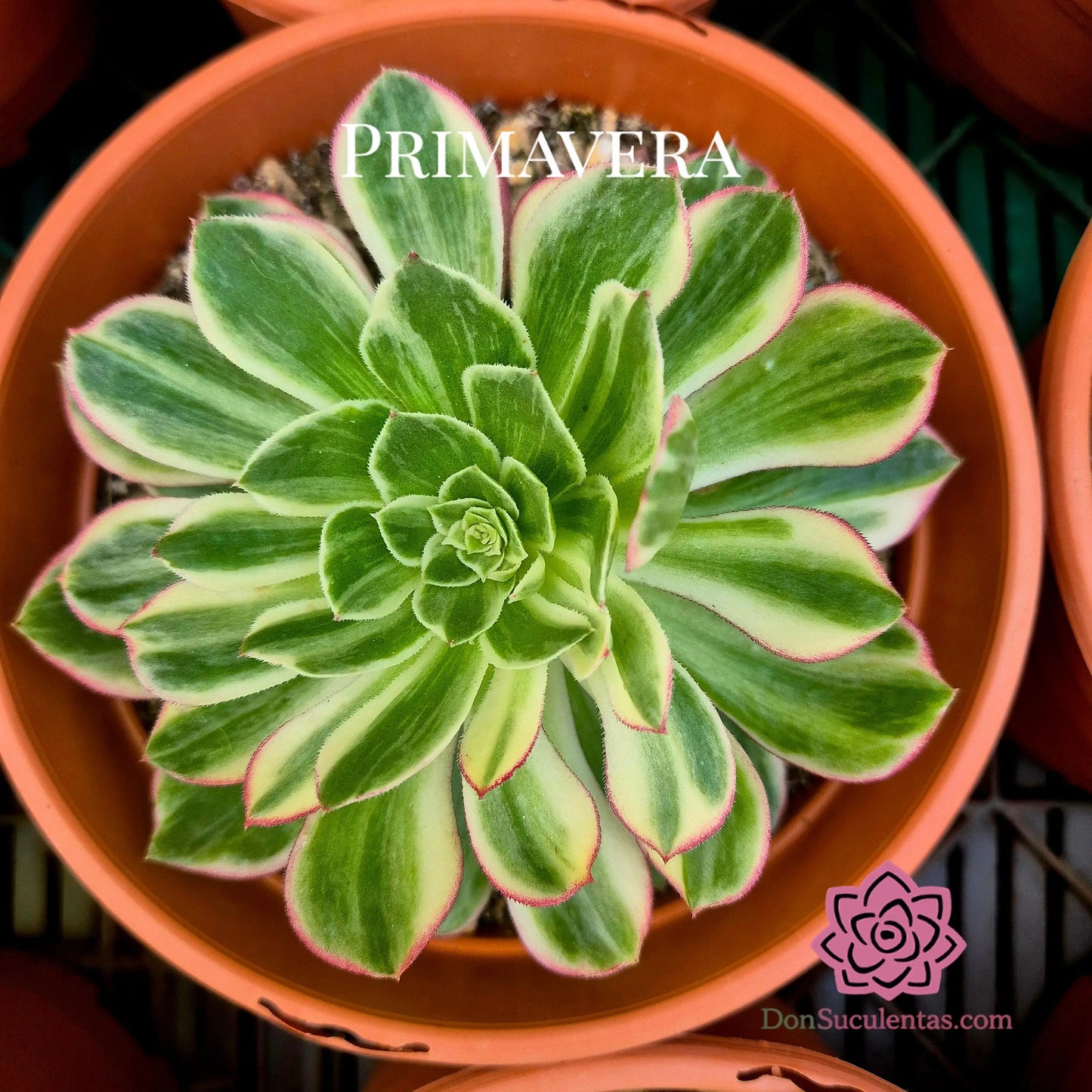
The Aeonium “Kaleidoskope” variegated is a mutation of A. Madeira Rose (also known as ‘Halloween’), belonging to the group of variegated aeonium collections derived from this well-known genetic line. During winter and in conditions of lower light, it develops leaves with a central green band accompanied by cream or soft white margins. Its most distinctive feature is the fine light streaks that run through the central green area, creating a delicate and highly ornamental pattern within the rosette.
With increased light and exposure, the lateral areas acquire pinkish tones that enhance the contrast and add even more visual depth to the plant.The Aeonium “Kaleidoskope” variegated exhibits balanced growth and good branching ability, showing stable behavior and no notable fragilities among the variegated aeoniums. Like other mutations derived from Madeira Rose, it may develop slowly during the early stages before becoming more lush and vigorous with maturity. Plant imported from China and reproduced in our greenhouse.
| 🌞 Light | 💧 Watering | 🌱 Difficulty | 📈 Growth |
|---|---|---|---|

|
|
|
|
Aeonium variegados : cultivation and care
The variegated aeoniums have a different growth cycle than many other succulents, developing mainly during autumn, winter, and spring, while in summer they significantly reduce their activity.
- 🌞 A lot of filtered light and good ventilation
- 💧 Moderate watering only with the substrate completely dry
- 🔥 Avoid intense sun and excess humidity during summer
- ❄️ Protect against prolonged frosts
During the summer dormancy, the rosettes tend to progressively close to protect the growth center from extreme heat. In this phase, excess moisture can easily cause root problems, especially with high temperatures and tropical nights.
Observing the plant and adapting to the actual growing climate is much more important than following strict watering schedules.
You can expand all the technical information in our specialized guide: Complete growing guide for
Shipping
The plant is shipped bare root (without substrate or pot).
The image corresponds to the exact specimen or one of very similar size and coloration depending on availability.
Explore more Aeonium variegados
View collection of
You can also discover other specialized categories: